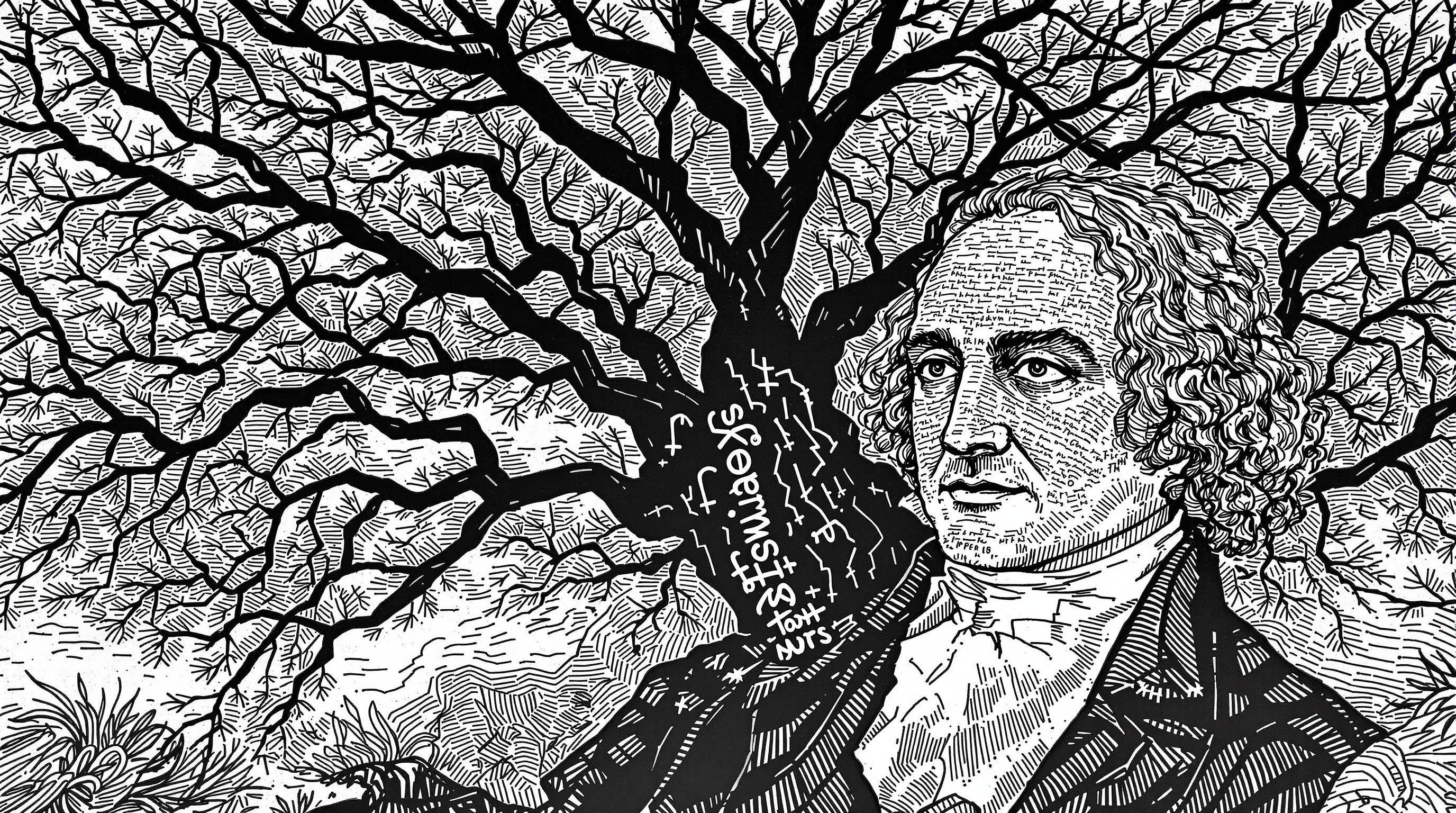
Negative Capability represents a counterintuitive leadership skill—the ability to remain comfortable with uncertainty and resist rushing to premature conclusions when faced with complex challenges. In a business world obsessed with quick fixes and instant answers, the remarkable power of pausing before acting separates true championship teams from the merely good ones.
Key Takeaways
- The ability to sit with uncertainty without forcing resolution creates space for breakthrough thinking
- Our brains naturally crave certainty, making Negative Capability a rare and valuable leadership trait
- Teams don’t distrust leaders who don’t know—they distrust leaders who pretend they do
The Paradox of Uncertainty as a Competitive Advantage
Early in my NBA career, I noticed something interesting about the most successful coaches and players. The greats weren’t necessarily the ones with all the answers—they were the ones comfortable not knowing for a little longer than everyone else.
This trait has a name: Negative Capability. Poet John Keats defined it as “when a man is capable of being in uncertainties, mysteries, doubts, without any irritable reaching after fact and reason.” In basketball terms? It’s the discipline to resist the quick shot in favor of the right shot.
Most leaders—in sports, business, anywhere—feel immense pressure to have immediate solutions. Their instinct when facing complexity is to force certainty where none exists. But I’ve seen firsthand how this reflex can lead to poor decisions, fractured team trust, and missed opportunities.
The greatest teams I played on embraced uncertainty as fuel for growth rather than treating it as a threat. They understood that sitting with the discomfort of not knowing often leads to deeper understanding and better outcomes.

Why Our Brains Fight What We Need Most
Our minds are hardwired to seek certainty. It’s a survival mechanism that’s served humans well for millennia. But in complex environments like championship teams or innovative organizations, this instinct can work against us.
According to a 2025 Deloitte study, 68% of leaders default to familiar solutions under stress, even when data suggests they’re wrong. This cognitive bias toward certainty can blind us to novel approaches that might solve our most pressing challenges.
I’ve seen this play out repeatedly. When facing a tough opponent, the natural impulse is to rely on what’s worked before. But the best coaches I played for created mental “white space” where new insights could form by resisting this impulse.
Think of it like navigating heavy fog. Poor leaders speed up, hoping to break through quickly. Great leaders slow down, tune their instruments, and trust the process. This patience often leads to clearer vision when it matters most.
Evidence That Proves Negative Capability Works
The power of Negative Capability isn’t just theoretical—it delivers measurable results across domains.
In military contexts, commanders who delayed counterattacks by 72 hours to gather intelligence reduced civilian casualties by 40% compared to units that reacted immediately. This strategic patience literally saved lives.
In business, Patagonia’s famous “Don’t Buy This Jacket” campaign emerged after months of sitting with the tension between profits and sustainability. This counterintuitive approach ultimately boosted sales by 30% while strengthening their brand identity.
On the court, I experienced this firsthand during crucial playoff moments. The Heat’s 2013 championship run featured several games where we resisted the urge to abandon our system despite falling behind. That patience paid dividends in the final minutes when opponents had exhausted their options while we still had fresh strategies.
Building Unbreakable Trust Through Vulnerability
Here’s a truth that took me years to learn: Teams don’t lose faith in leaders who admit uncertainty—they lose faith in leaders who fake certainty when none exists.
Amy Edmondson’s research at Harvard confirms this. Teams with high psychological safety—where members feel comfortable expressing uncertainty—have 76% higher engagement, 50% faster problem-solving, and 12% lower turnover.
During my time with the Miami Heat, I noticed how Coach Spoelstra built trust by being honest about what we didn’t know. When we faced new challenges, he would often say, “We haven’t figured this out yet, but we will.” That vulnerability didn’t diminish his authority—it enhanced it.
This approach creates an environment where authentic dialogue flourishes. When leaders model comfort with uncertainty, they give permission for everyone to contribute without fear of looking foolish.
Turning Tension Into Breakthrough Results
Negative Capability isn’t just about building trust—it’s about unlocking collective intelligence.
Google’s Project Aristotle found that top-performing teams share equal airtime for all voices. This equal participation only happens when team members feel safe expressing half-formed ideas and questions.
According to MIT research, teams using Negative Capability-style pauses solve complex problems 42% faster than teams that rush to consensus. This improved performance stems from allowing diverse perspectives to collide and combine in unexpected ways.
I saw this dynamic at work during film sessions with the Heat. When we faced a particularly challenging opponent, Coach would often create space for everyone—from veterans to rookies—to share observations. The breakthrough defensive adjustments often came from unlikely sources, precisely because we cultivated an environment where uncertainty was welcomed rather than avoided.
Why Ambiguity Creates Clearer Direction
Here’s the fascinating paradox: Teams that embrace uncertainty actually achieve greater strategic alignment in the long run.
McKinsey’s 2025 analysis shows organizations using Negative Capability practices achieve 30% faster strategic pivots and 2.1x higher goal clarity scores. By allowing time for diverse viewpoints to be heard and processed, these organizations build more robust strategies that can withstand unexpected challenges.
Contrast this with Kodak’s famous failure to acknowledge the disruptive potential of digital photography. Rather than sit with the uncomfortable reality that their core business might become obsolete, they rushed to protect film revenue—a decision that ultimately led to bankruptcy.
The key insight is that Negative Capability creates “idea collisions” that filter out knee-jerk reactions and surface hidden opportunities. This process might feel uncomfortable in the moment, but it leads to more durable strategies and clearer direction.
My Personal Model: Lessons From Basketball’s “No-Stats All-Star”
Throughout my career, I was often called the “No-Stats All-Star” because my contribution rarely showed up in traditional box scores. My influence came not from scoring but from creating space—both physically on the court and mentally in team dynamics.
I developed three Negative Capability practices that served me well:
- The Pause: During timeouts, I’d ask, “What’s not working that we haven’t admitted yet?” This created space for honest assessment.
- The Probe: In film sessions, I’d highlight patterns others missed, often because I spent more time studying than reacting.
- The Permission: By openly saying things like “I need help guarding Kobe,” I normalized vulnerability, which led to better team defense.
These practices contributed to two NBA championships, four conference titles, and influence beyond my playing career. The lesson? Championships aren’t won by the plays you make. They’re won by the pauses you take that create space for deeper understanding.
Practical Steps for Cultivating Negative Capability
In an AI-driven world where machines can generate instant answers, the competitive advantage shifts to those who can ask better questions and sit with complexity.
Here are actionable techniques for developing Negative Capability in your team:
- Normalize phrases like “I don’t know yet” and “Let’s explore that further”
- Build intentional pauses into decision processes—the “24-hour rule” before major commitments
- Practice “scenario planning” rather than single-point forecasting
- Create space for dissenting opinions, especially when consensus forms too quickly
- Reward thoughtful questions as much as confident answers
The Navy SEALs have incorporated ambiguity tolerance training into their programs, resulting in 28% fewer casualties in complex operations. Their mantra? “Get comfortable being uncomfortable.”
The core message is clear: Negative Capability isn’t about inaction—it’s about resisting knee-jerk reactions to create space for breakthrough thinking. In a world obsessed with immediate answers, the willingness to pause might be your greatest competitive advantage.
Sources:
leadingsapiens.com/developing-negative-capability-leadership
flora.insead.edu/fichiersti_wp/InseadEMCCCtheseswave19/84279.pdf
fromthegreennotebook.com/negative-capability-the-one-skill-military-leaders-need
guerinconsulting.com/post/paradox-negative-capability-is-a-very-good-thing
m13.co/article/nba-all-star-shane-battier-leadership-founders-future-perfect-2024
Leave a Reply